Grevasalvas
Explore this hamlet and its twin Blaunca, above Sils lake!
Costanza
7/7/20252 min read
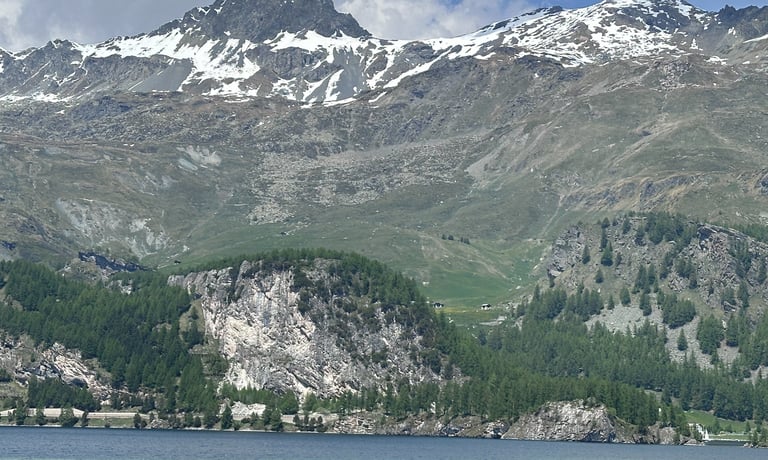
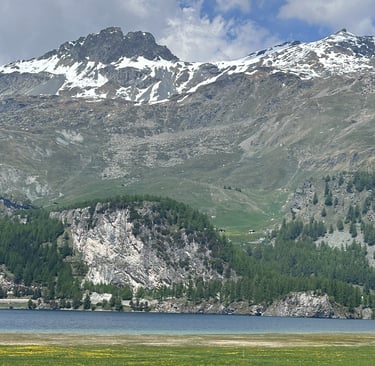
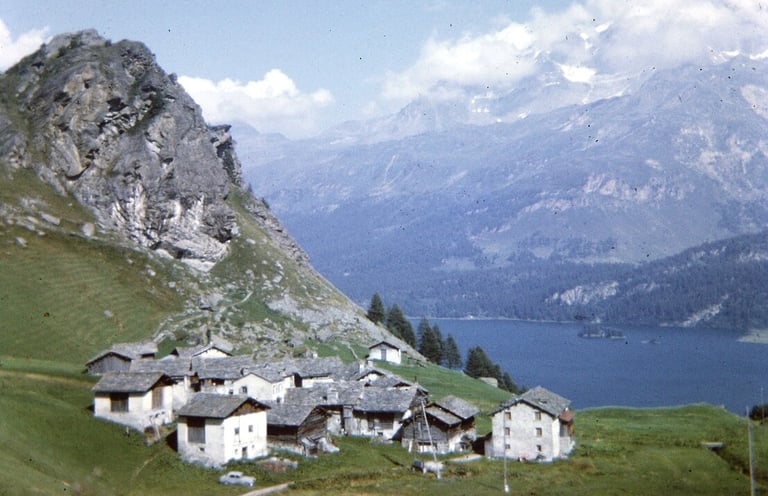
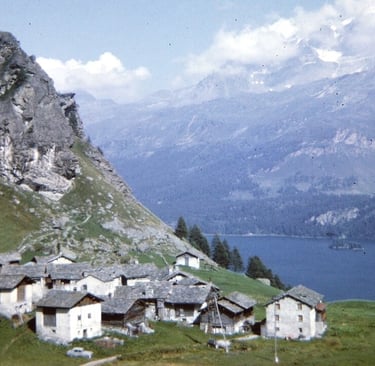
Explore the enchanting village of Grevasalvas, a hidden gem nestled above Lake Sils. Invisible from the main road, it becomes visible when viewed from Isola or during a walk above the lake toward Val Fex. Along with its twin hamlet, Blaunca, just a few meters away, Grevasalvas (both part of Sils) feels like a step back in time.
Situated at 1,940 metres above sea level at the foot of Piz Grevasalvas, the village takes its name from the Rhaeto-Romanic words greva (“scree slope”) and alv (“white”), reflecting the surrounding landscape.
Grevasalvas and Blaunca were originally clusters of stables and simple alpine dwellings. From the 17th century, farmers and herders from Val Bregaglia used them as summer settlements. Some buildings still serve agricultural purposes, while others have been converted into modest holiday homes. The well-preserved stone houses with traditional stüva rooms offer a vivid glimpse into this alpine past.
The surrounding land was used as hay meadows and pasture for cattle. In summer, women would walk eight hours with livestock from Soglio, 25 kilometres away. Men transported hay and supported the work at the alp. Daily, herders led cows and goats up the slopes and returned in the evening. Each summer, milk was processed into cheese, stored in cool cellars, and brought down during the transhumance.
By the late 20th century, many had abandoned farming here, using the buildings instead as simple retreats. Their legacy lives on in works like Paola Giovanoli’s Fu il 38° anno che restai qui con 5 vacche (“It was the 38th year that I was here with 5 cows”), based on the diaries of Fiorentina Coretti-Pool, who lived in Grevasalvas at the end and during the first decades of the 20th century.
Strolling among the neatly kept chalets, it’s easy to imagine Heidi’s bearded grandfather stepping out the door. In fact, in the 1970s, Grevasalvas was chosen as the filming location for a Heidi TV series, earning it the nickname “Heidi village.” While the novel’s author Johanna Spyri was inspired by Maienfeld, Grevasalvas captured the idyllic alpine setting perfectly; with its green meadows, wildflowers, and crystal-clear streams.
Beyond its storybook charm, Grevasalvas is a gateway to breathtaking hikes. From the village, a path climbs just above 2,000 metres, offering a spectacular panoramic viewpoint over the Upper Engadin’s lakes.
Related Stories
Address
ENGADINWALKS.COM - GUIDED WALKS
Chesa Müstaila - Zuoz
Contacts
COSTANZA SAN MAURO
info@engadinwalks.com